Meta has moved Facebook page setup into Meta Business Suite and retired Business Manager. Here's how to set up a Facebook business account properly in 2026, in five steps.
A Facebook business account, known officially as a Facebook business page, is one of the easiest free tools an Australian small business can use to get found, get reviewed, and stay in front of customers. The process has changed since 2021. Meta has moved page setup into Meta Business Suite, retired the old Business Manager, and tightened a few things around username and ownership.
Here's how to set up a Facebook business account properly in 2026.
Facebook business account vs Facebook business page, quick clarification
When most Australians say "Facebook business account", they usually mean one of two things:
- →A Facebook business page, the public profile that represents your business on Facebook, separate from your personal account.
- →A Meta Business Suite account, the dashboard where you manage your page, run ads, schedule posts and track insights across Facebook and Instagram.
You'll end up with both. You create the business page through Meta Business Suite, then manage it from there going forward. Both are free.
Top benefits of a Facebook business page
- →Multiple ways to engage with customers, comments, messages, reviews, live video.
- →Maximise your reach with boosted posts when you need to.
- →Gather online reviews from real customers.
- →Drive traffic to your website.
- →Use Meta's audience insights to understand who actually buys from you.
Page live but not pulling its weight?
Book a free strategy session and we'll show you how to turn your Facebook page into a real lead source.
If you don't already have a Facebook business page in 2026, you're missing one of the simplest visibility wins available to Australian small businesses.
Before you start
A Facebook business page must be connected to a personal Facebook account. There's no way around this, Meta uses your personal account as the digital identity that owns and manages the page. Your personal profile doesn't show up publicly on the business page, but it has to exist.
Have these ready before you begin:
- →Business name (exactly as it appears on your other listings)
- →Two or three business categories that fit
- →Logo (recommended size: 170 x 170 pixels minimum)
- →Cover image or short video (recommended size: 820 x 312 pixels for image)
- →Website URL, phone number, physical address or service area
- →A short business description (255 characters)
Block out 30 minutes and do this in one sitting. Half-built pages stay half-built.
Step 1, Go to Meta Business Suite
Head to business.facebook.com and sign in with your personal Facebook account. If you don't have a personal account, you'll need to create one first, Meta doesn't allow you to create a business presence without it.
Once logged in, you'll see the Meta Business Suite dashboard. If this is your first time, Meta will walk you through creating a business portfolio (used to manage all your business assets, pages, ad accounts, Instagram accounts, products).
Step 2, Create your page
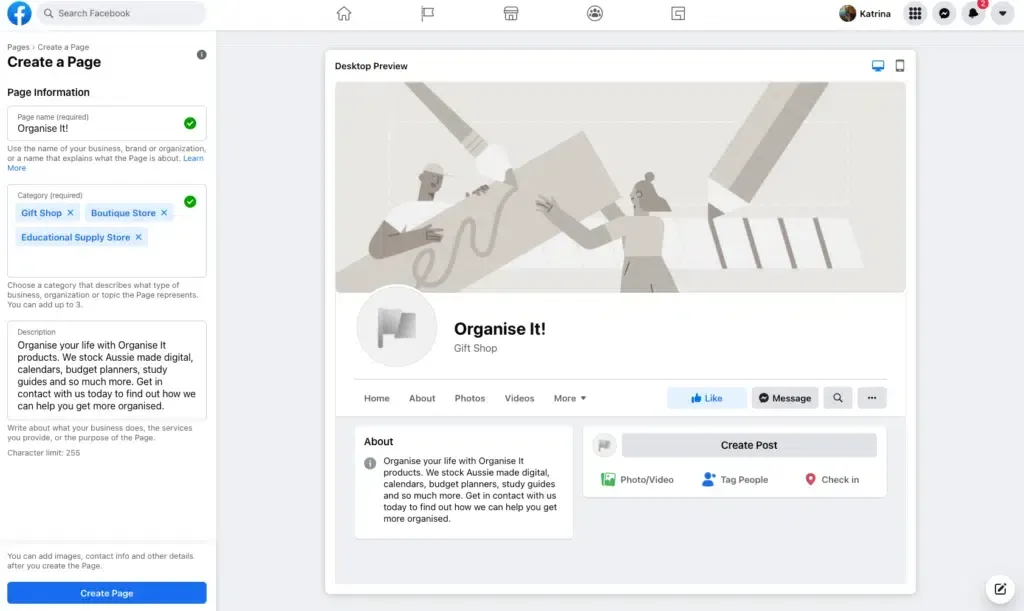
Inside Meta Business Suite, click Settings in the bottom left, then Pages, then Add in the top right. Choose Create a new Facebook Page.

You'll be prompted to enter:
- →Page name, your exact business trading name. Don't add suburbs, slogans, or keywords. Meta restricts pages that try.
- →Categories, up to three. Pick the one that matches what most of your customers search for as the primary. Add two more that genuinely apply (a café might add Coffee shop and Breakfast & brunch restaurant).

Double-check your spelling and grammar exactly matches your other listings (your Google Business Profile, your Localsearch business profile, your website). Inconsistent business names across platforms hurt your local SEO and confuse Google. A listing management tool can keep this consistent automatically.
Accept Meta's terms and click Create Page.
Step 3, Add your logo and cover image
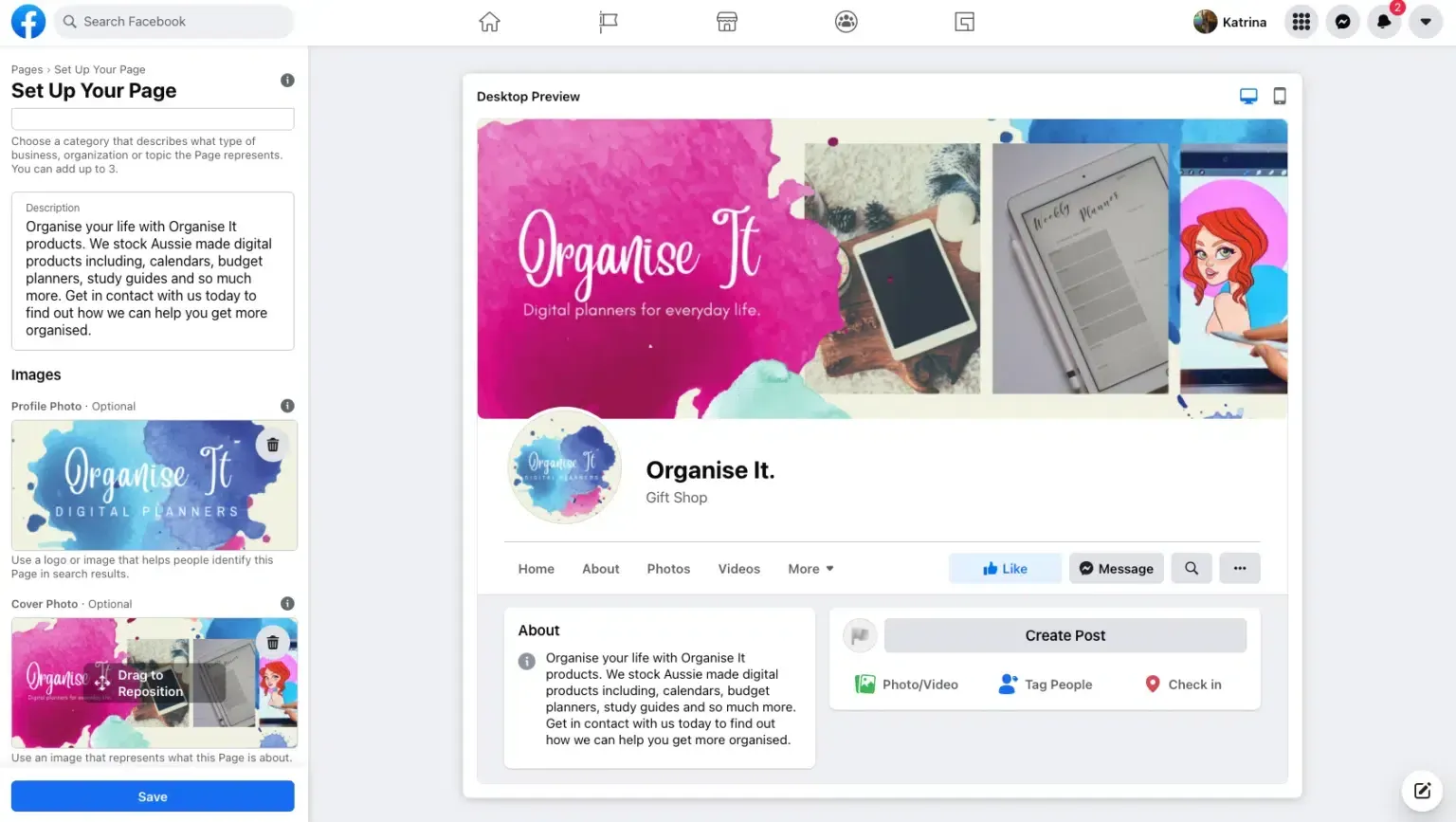
Your page is now live but it looks empty. First fix: the imagery.
Profile image (logo). Use the same logo you use everywhere else, your website, your Google Business Profile, your other social accounts. Brand recognition relies on consistency. Make sure it's clear at small sizes, since most people will see it as a thumbnail next to your posts.
Cover image. Use a high-resolution photo that says something specific about your business. Options that work well:
- →A photo of your shopfront with clear signage
- →Your team at work
- →A signature product or finished job
- →A short video walk-through (Facebook supports video cover images)
Don't use a generic stock image. Don't cram every offer onto one banner. One clear visual that communicates who you are.
Step 4, Customise your page
Now make it work as a sales tool, not just a profile.
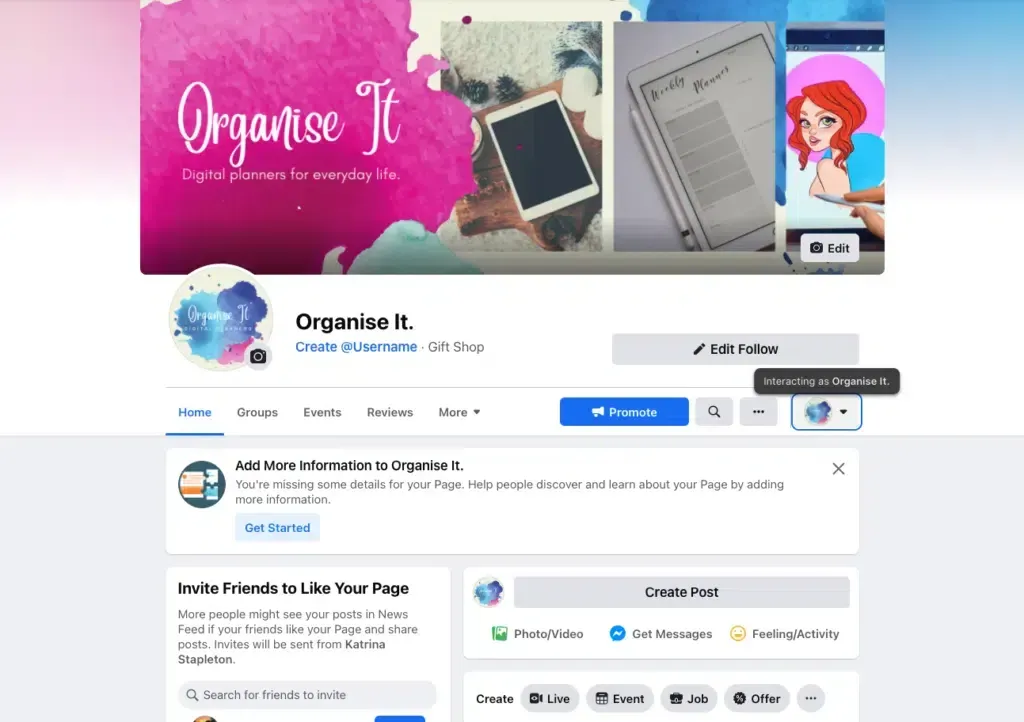
Create your @username. This becomes part of your custom URL (facebook.com/yourbusiness) and lets other businesses tag you in posts. Use your business name or something very close to it.
A note on the username: you may see a "Page isn't eligible to have a username" error if your page is brand new. Facebook generally requires the page to have at least 25 likes and at least one published post before you can claim a username. The fastest way through this: post something useful, then invite friends and existing customers to like the page.
Set up your action button. This is the blue button at the top of your page, the first thing visitors notice. Meta gives you several options: Send Message, Book Now, Sign Up, Learn More, Call Now, Order Food. Pick the one that matches how customers actually convert with your business.
If you're not sure, Send Message or Call Now are the safest defaults. Both put a real action one tap away.
Fill in the About section. Scroll halfway down your page. Add your website, phone number, address or service area, opening hours, and a short business description. This information is what Meta uses to surface your page in search and what customers scan before they decide whether to engage. Don't leave fields blank.
Step 5, Publish your first post and get started
You're live. Now the page has to do something.
In your first week:
- →Publish at least three posts, one introducing the business, one showing recent work or product, one with a clear call to action.
- →Set up an autoresponder for messages so people aren't met with silence after hours.
- →Invite friends, family and existing customers to like the page from your personal account.
- →Add your Facebook page link to your email signature, your website, your Google Business Profile and your printed marketing.
- →Reply to every message, every comment and every review within 24 hours where you can.
The point of a Facebook business page isn't to exist. It's to give Meta and Google something to surface when locals search for you, and to give customers an active channel to engage.
For most small businesses, posting once or twice a week is enough, provided the posts are actually useful. Specials, finished work, behind-the-scenes shots, customer reviews, seasonal updates. Boost the ones that perform.
If posting weekly and managing responses is more than you have time for, a Facebook brand awareness service handles it for you while you focus on running the business.
Frequently asked questions
Is a Facebook business account free?
Yes. Creating a Facebook business page, posting, gaining followers and opening a Facebook Shop are all free. The only cost is if you run paid ads, Australian small business Facebook ad campaigns typically range from $20 to $1,000+ per month depending on your reach goals.
Does a Facebook business account have to be linked to a personal Facebook page?
Yes. Meta requires every business page to be created and managed from a personal Facebook account. Your personal profile isn't displayed publicly on the page, but it has to exist. If you don't want to use your own personal account, you can use a family member's, but it's not recommended. If they leave, you lose access.
Why is my Facebook business page not eligible to have a username?
This usually means one of two things:
- →Your page has fewer than 25 likes
- →Your page hasn't published a post yet
Once you've published at least one post and gathered 25 likes, you should be able to claim the username. If you're still blocked, add another administrator to the account whose personal profile is well-established, sometimes that resolves the eligibility check.
What's the difference between Meta Business Suite and Facebook Business Manager?
Meta retired Business Manager. Everything that used to be in Business Manager has been folded into Meta Business Suite, same login (business.facebook.com), more streamlined interface. If you're managing a page in 2026, you're managing it through Meta Business Suite.
How long does it take to set up a Facebook business page?
About 30 to 45 minutes if you've got your logo, cover image, business details and a couple of post ideas ready before you start. If you walk in cold, expect to spend longer, Meta will keep asking for things you haven't prepared.
Can I run my Facebook business page from my phone?
Yes. The Meta Business Suite mobile app handles posting, messaging, reviewing insights and replying to comments. For initial setup it's easier on desktop, but for day-to-day management, the mobile app is fine.
A Facebook business page is one of three free profiles every Australian small business should claim, alongside your Google Business Profile and your Localsearch.com.au listing. Together they cover the three places most Australians look when they're deciding whether to call you.
Got the basics in place and want the page actually working as a lead source? Talk to Localsearch about a Facebook brand awareness campaign tailored to your suburb and industry.