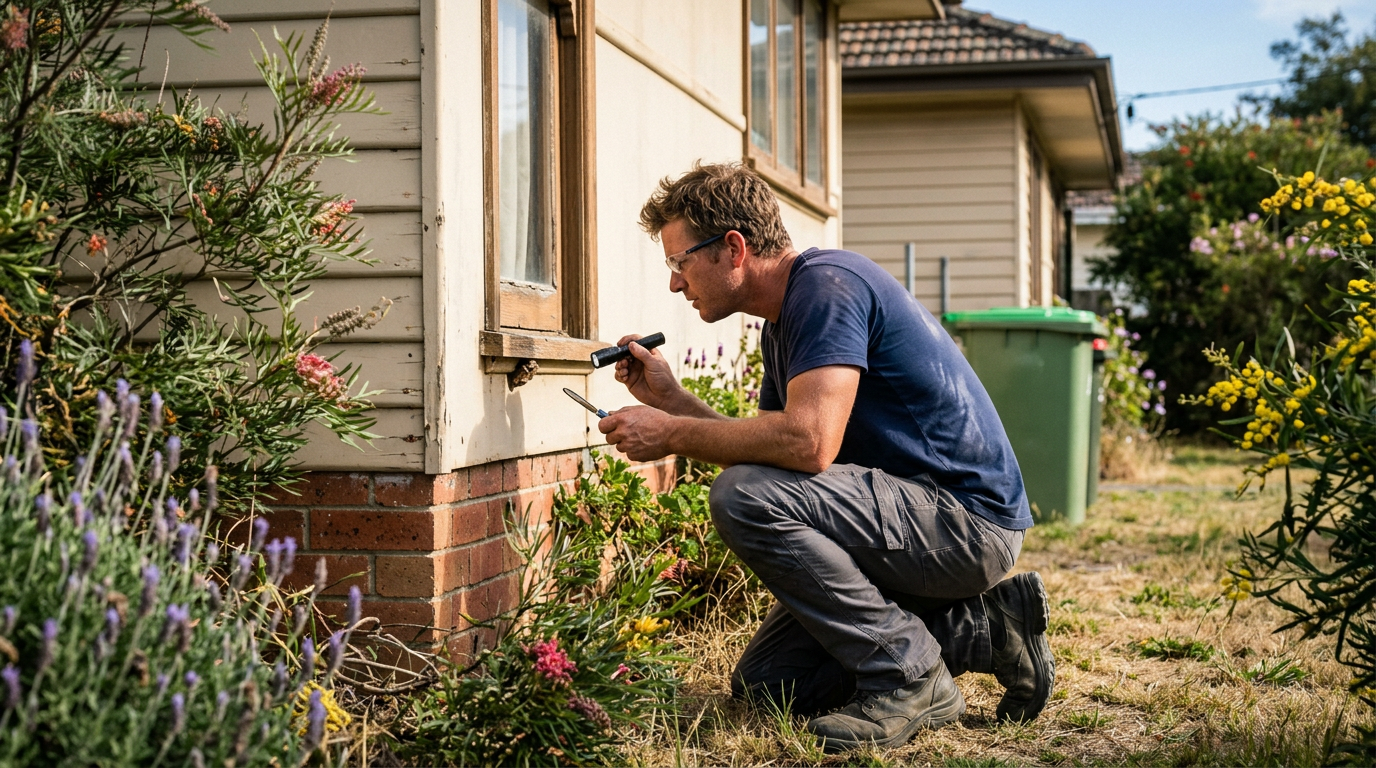
Spring panic is a good time to be easy to find. Build useful local pages for wasps, bees and bugs getting inside, then make calling you the simple bit.
A homeowner spots wasps slipping through a garage-roof gap on Saturday morning. They don't hunt for a broad pest-control brochure. They search pest control near me, tap a local result, and want to know if someone can assess it safely.
That’s the spring job many operators miss. Your main service page can’t answer every urgent worry about eaves, vents, screens and roof gaps.
Start with the jobs that make people call today
Build pages around problems you actually attend. A pest controller in Geelong might get regular calls for wasp nests under eaves, bees near roof cavities, and insects entering through garage seals.
Don’t make a page for every insect under the sun. Pick a small handful of services that bring worthwhile residential call-outs each spring.
- →Wasp nest assessment and removal
- →Bee activity around roof gaps or wall cavities
- →Bugs entering a house through vents, screens or door seals
- →Pest entry-point inspections for homes
- →General spring pest inspections where that service is part of your work
Your phone records are a decent starting point. Check recent spring seasons and note the recurring call reasons. If wasp jobs come up far more often than cockroach calls, lead with wasps.
Match the words homeowners use when they’re worried
People rarely describe a problem like an industry manual. They type “bees in roof”, “wasps near garage”, or “bugs getting into house” while standing under the eaves.
Website not converting?
Get a free website review
Use those plain phrases in your page copy, then explain what you’ll inspect. For a Brisbane home, that could mean checking roof gaps, eaves, vents, garage door seals and damaged flyscreens.
Write the page around the scene, not the insect label
A page called “Wasp nest removal in Ballarat” can start with the common signs: repeated wasp traffic near one gap, activity under an eave, or a nest visible near a shed.
Then say what happens next. Explain that you’ll assess access, nest location and household safety before recommending removal or another suitable approach.
A worried homeowner wants three answers fast: what they’re seeing, what not to do, and how soon they can speak with a local operator.
Keep wasp and bee advice safe and properly qualified
Don’t write like every buzzing insect needs the same treatment. A visible wasp nest and bee activity near a roof cavity can call for different assessment and handling.
Tell homeowners not to block an active entry point, spray a nest, poke at it, or climb onto a roof. That’s useful advice for a family in Newcastle seeing activity around second-storey eaves.
If you offer bee relocation, describe it carefully. Say it depends on the species, site access, colony location, local requirements and available specialist support.
Never promise relocation on every job. State and local rules can vary, and the safest option depends on what your inspection finds.
Build one useful page before making more suburb pages
Thin suburb pages are a waste of a good afternoon. Changing “Ipswich” to “Toowoomba” in the same short copy gives homeowners nothing new to read.
Start with a strong service page for a real job, such as wasp nest removal. Include what customers notice, safe actions before you arrive, areas you cover, your booking options, and common access issues.
Then create local pages only where you can add genuine local detail. A page for the Sunshine Coast might mention service coverage across nearby suburbs, typical home areas you attend, and realistic response expectations.
- →A clear service title, such as “Wasp nest assessment and removal in Buderim”
- →Signs the homeowner may notice around eaves, sheds, roofs or garages
- →A short safety note about keeping people and pets away
- →What your inspection covers
- →Photos from your own work, where you’ve got permission to use them
- →Your service area and a phone, form and photo-upload option
- →A real review that relates to responsive service or clear communication, with permission
Show what an entry-point inspection actually covers
“Inspection” is too vague on its own. Spell it out so a homeowner with bugs coming through a laundry vent knows what they’re booking.
For a typical house in Adelaide, explain that you may inspect accessible roof gaps, eaves, vents, screens, garage seals, pipe penetrations and door gaps. Only list areas your team actually checks.
Also be clear about the limit. A pest inspection identifies likely access points and activity, but it may not include repair work unless you offer that service.
Give them a simple photo request
Photos help you triage the call before the ute leaves the depot. Ask for a wide shot showing the location, plus a closer photo taken from a safe distance.
Make the booking step obvious on every local page
A homeowner with wasps near the kids’ trampoline isn’t filling out a long enquiry form. Put a tap-to-call button near the top, then repeat it after your safety advice.
Offer a second path for people at work or unable to talk. A short form with photo upload suits a café owner in Cairns checking a nest near the rear storeroom.
Set expectations you can keep. If you return calls promptly, say that. If attendance depends on location and workload, say that instead of promising it everywhere.
Use your Google Business Profile to back up the page
Your local page and Google Business Profile need to tell the same story. If your website says you cover Bendigo, but your profile has no recent job photos or service detail, callers may keep scrolling.
Add the relevant services to your profile, keep your hours accurate, and post useful photos from real work. A photo of a technician assessing a nest from the ground says more than a stock insect image.
Ask for reviews after completed jobs, not while someone’s still stressed about a nest. A short review mentioning clear advice, punctual arrival or tidy work helps the next homeowner choose.
Give each page enough proof to earn the call
Big operators and directories can look established. Your page needs proof that you’re a real local business who understands the job.
- →Your business name, phone number and service area
- →Recent, original job photos with clear captions
- →Licensing or insurance details you’re permitted to display
- →A real customer review, used with consent
- →Clear information about what happens after a call or photo enquiry
- →A contact option that works on a mobile screen
Keep every claim honest. If you service regional towns by phone and booked visits, explain that plainly rather than pretending you’re around every corner.
Check what brings calls and improve one page at a time
Don’t publish a stack of pages and hope for the best. Launch a wasp page, a bee-activity page and an entry-point inspection page, then watch the call patterns.
Ask your receptionist or technician to note the words callers use. If callers say “wasps in the wall” and your page only mentions eaves, add a short section that explains how you assess wall-cavity activity.
We’ve worked with more than 15,000 Australian small businesses since 1993. The pages that keep earning enquiries are usually the ones that answer the exact problem before the customer picks up the phone.
Start with the page your next caller needs
Pick the spring job that causes the most urgent calls in your patch. Write a page that describes the signs, gives safe next steps, explains your inspection, and makes contact quick.
For a pest controller in regional Victoria, that might be a wasp page first. For a coastal operator getting calls about bees around roof spaces, start there. Build the page around real jobs, not a list of suburbs.