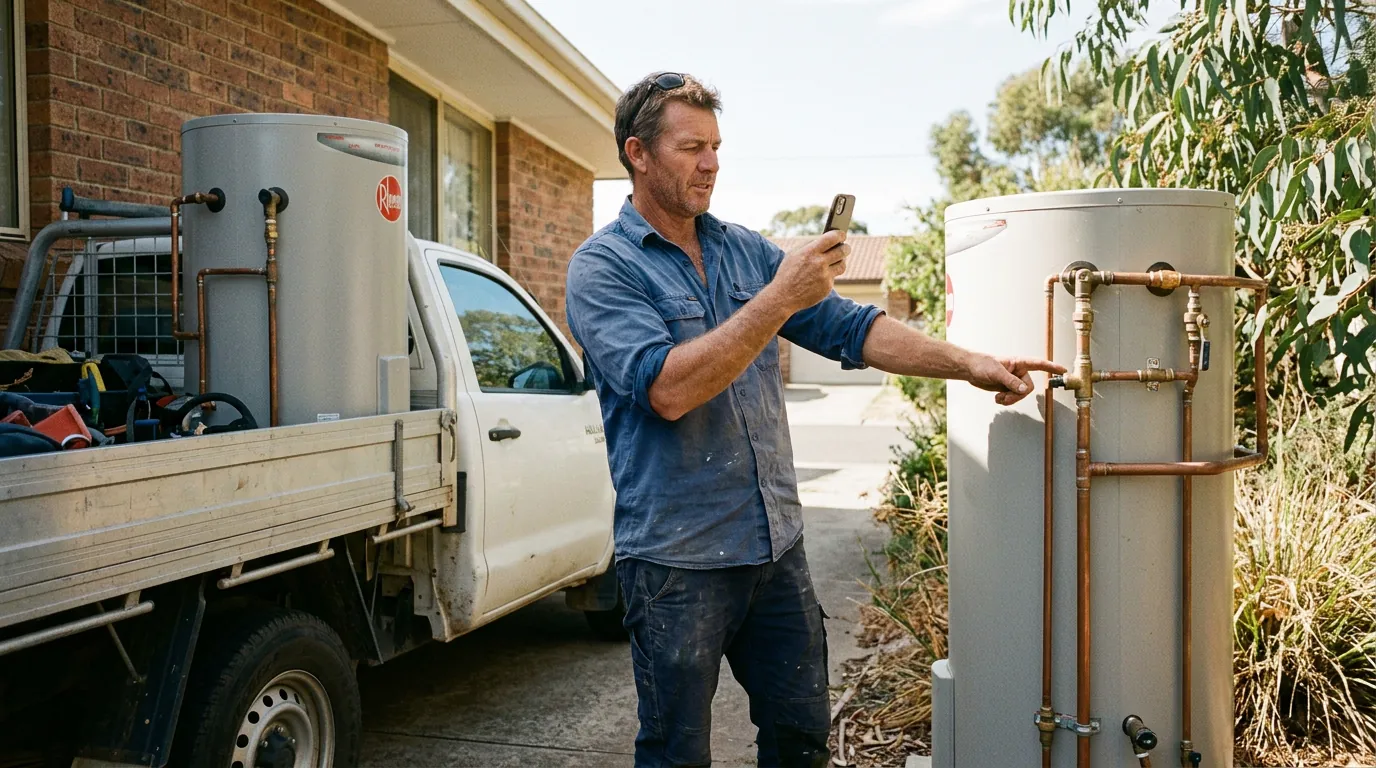
Your team doesn't need to become influencers. Showing the people behind your business doing the work can be some of the most valuable content you create.
A plumber finishes a hot water replacement. An electrician tests a new switchboard. A landscaper steps back to look at a completed backyard.
These aren't staged advertising moments. They're real examples of your team doing what customers are paying them to do.
And that's exactly why they can be so powerful.
For small businesses, particularly tradies, employee-generated content can give potential customers something polished advertising often can't: proof of the people and work behind the business.
You don't need expensive cameras, elaborate scripts or employees who are comfortable dancing in front of a camera.
Sometimes, a 15-second video of a tradie explaining what they have just fixed is enough.
Your customers want to see who they're hiring
When someone is looking for a plumber, electrician, builder or landscaper, they're not just choosing a service.
They're choosing the person or team who is going to turn up at their home or business and do the job.
That makes trust a big part of the decision.
A professional photo of your business looks good, but a potential customer seeing your actual team on the job can answer questions that a polished image can't.
Do they know what they're doing? Do they take pride in their work? Do they work neatly? Do they actually do the type of job I'm looking for?
That's where real content can help.
A Gold Coast electrician explaining why a switchboard needed upgrading, a Brisbane plumber showing a neatly installed hot water system or a Newcastle landscaper walking through a finished backyard gives customers an insight into the business before they've even picked up the phone.
You don't need to make your staff famous. You just need to let potential customers see the people they could be hiring.
Use a five-shot proof-of-work video formula
Useful proof-of-work videos can follow the same simple sequence of shots. They can be collected quickly, and the clips don’t need fancy editing.
Not sure what to fix first?
Book a free 30-minute strategy session
- →Problem: Show what needed fixing, cleaning, fitting or preparing. A Newcastle detailer can show muddy carpet mats before the clean.
- →Process: Capture one safe step in the work. A barber in Bendigo can show the careful sectioning before a fade.
- →Detail: Zoom in on something customers might miss. Think neat pipework, a clean tile edge or a fresh cabinet hinge.
- →Result: Film the finished job, meal, haircut or display from a clear angle.
- →Next step: Add one plain sentence. “Need a hot-water replacement in Geelong? Give us a call.”
Keep each clip short. A small set of brief clips can give you enough material for a short reel, photos and later posts.
Make capturing content part of the job, not another job
Your team is already busy.
If capturing content feels like a separate task that takes 30 minutes after every job, it probably won't last. Keep it simple.
For a Brisbane landscaping crew, the end of a shift might mean filming a completed turf job and a close-up of the edging. For a salon in Adelaide, it could mean capturing finished colours after a quiet afternoon slot.
Keep the weekly workflow simple
- →Monday: Pick two jobs, products or services worth capturing that week.
- →During the week: The nominated staff member takes the five shots after customer permission is confirmed.
- →Friday: One person checks the clips for privacy, safety and quality.
- →Friday afternoon: Turn the best clips into one short video and one photo post.
- →Next week: Reuse the same footage on the channels your customers actually use.
Set aside a regular block to review and post a decent piece. That beats occasional sessions spent trying to invent a backlog of staff social media content.
Set clear content rules before filming
Your team needs clear boundaries, not a thick policy nobody reads. Keep your filming rules concise, print them for the staff room and save them in the shared folder.
- →Film work, tools, products and your team’s hands where possible.
- →Ask a customer before filming their home, face, voice, vehicle plate or personal belongings.
- →Get clear written permission before using a customer’s face, testimonial or name in a post.
- →Never film children, medical information, payment screens, addresses, keys, alarm panels or customer paperwork.
- →Never film a task that takes attention away from safety. A roofer doesn’t film while on a ladder.
- →Don’t show another business’s confidential information, job details or private messages.
- →Upload clips to the business folder. Don’t post work footage from personal accounts unless you’ve agreed on it in writing.
- →The business approves every post before it goes live.
For social media policy for employees Australia, keep your rules practical and get workplace advice if you’re unsure about your contracts or privacy obligations. A written customer consent note helps document permission rather than assuming a smile means yes.
Identify low-risk and off-limits footage
Proof-of-work videos do not usually need a customer in frame. To reduce privacy risk, show the work itself and a result that does not reveal private details.
Low-risk footage you can usually capture
- →A Townsville aircon technician cleaning a unit at the workshop, with no customer details visible.
- →A Perth florist arranging a bouquet on the shop bench.
- →A Canberra café worker pouring latte art behind the counter.
- →A Gold Coast mechanic showing a worn brake pad beside its replacement, away from customer paperwork.
- →A Darwin retailer unpacking a new delivery and setting up a display.
Footage to leave alone unless you’ve got clear approval
- →A customer’s face, voice, home interior, front number plate or street address.
- →A clinic consultation, treatment room, patient record or appointment screen.
- →A job site with unsafe work underway or required protective gear missing.
- →A customer complaint, damaged property or an employee having a rough day.
- →A tradie’s screen showing quotes, invoices, access codes or supplier prices.
A good rule is simple: if the clip could embarrass, identify or expose someone, don’t film it. A clean shot of a finished deck in Hobart tells the story without filming the family using it.
Use three easy video prompts for each business type
Staff freeze when the instruction is “make content”. Give them prompts tied to work they already understand.
- →Tradies: Show the fault, one careful repair step and the tested result. This works well for tradie video marketing because customers can see the care behind the quote.
- →Cafés: Show the first batch, one prep detail and the finished plate. A quick clip of fresh cabinet food before 8am is enough.
- →Salons: Show the consultation tools, one technique and the final colour in natural light. Keep the client out of frame unless they’ve agreed.
- →Retail: Show three ways to use a new product.
- →Physios and clinics: Show the room setup, approved equipment and a general exercise demonstration by a staff member. Keep patients and personal details out of it.
- →Mobile detailers: Show a dirty surface, one cleaning pass and the final finish. Number plates stay out of frame.
Repurpose one video where local customers look
Your team films once. You can then use that footage in the places customers are checking you out before they call, book or visit.
Don’t force every clip onto every channel. A short tyre-repair video can suit social media, while a clean finished photo, video and short explanation may be more useful on the relevant service page of your website or your Google Business Profile.
Adding real proof-of-work content to your website is crucial. In a competitive market, customers have plenty of businesses to choose from, so showing the people behind your business and the work you actually do can help you stand out and build trust before someone makes an enquiry.
Your website should work alongside your other digital channels, rather than sitting separately from them. The right content, on the right service pages, can help potential customers understand what you do and feel more confident about getting in touch. If you want to see how your website and digital presence are working together, speak with one of our specialists for a free digital audit and find out where you could strengthen your online presence.